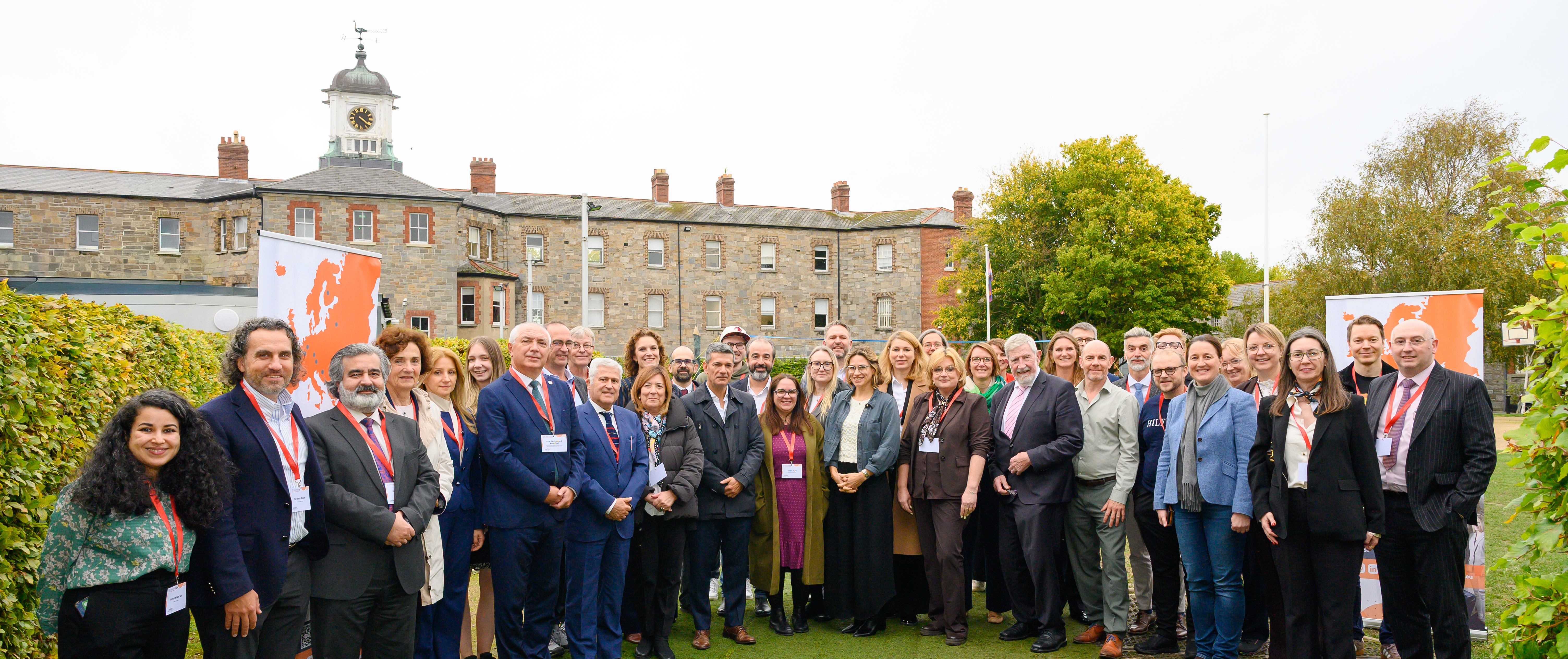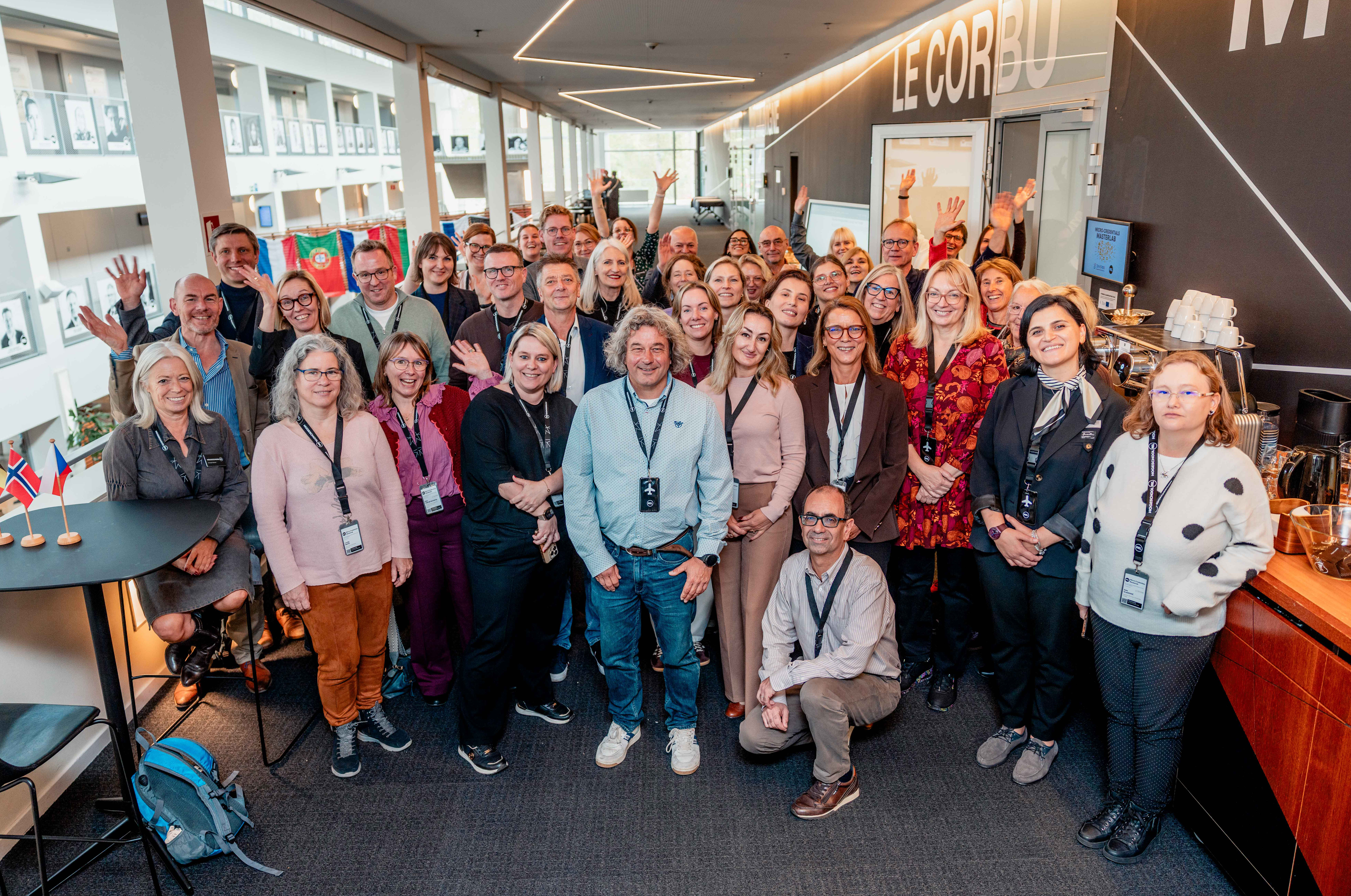
PXL University of Applied Sciences hosted the DIVERSE Micro-Credentials Master Lab in Hasselt, Belgium, from 19 to 23 October. Bringing together more than 50 participants from DIVERSE partner institutions and universities across Europe and beyond, including Canada, South Africa and Ecuador, the five-day event focused on developing flexible, collaborative learning programmes addressing key challenges in entrepreneurship, healthcare, sustainability, inclusion and international cooperation.
How can European universities work together to offer students and professionals learning opportunities that go beyond the boundaries of their own institutions? And how can higher education respond more effectively to the evolving needs of society and the labour market?
These questions were at the heart of the DIVERSE Micro-Credentials Master Lab, hosted by PXL University of Applied Sciences in Hasselt, Belgium. The event brought together lecturers, education experts and curriculum developers to exchange expertise, explore shared challenges and jointly design new educational content.
Rather than a traditional conference consisting solely of presentations and lectures, the event was a collaborative working week during which participants worked together to develop new learning opportunities. More than 50 people took part, representing not only DIVERSE partner institutions but also universities from across Europe and beyond, including Canada, South Africa and Ecuador. This broad international participation created opportunities to exchange perspectives, share expertise and foster collaboration across institutional and geographical boundaries.
The initiative reflects DIVERSE’s commitment to strengthening cooperation between higher education institutions and creating more flexible, internationally connected learning opportunities.
Micro-credentials: flexible learning for a changing world
At the centre of the initiative are micro-credentials: short, targeted learning programmes that enable learners to acquire specific knowledge and skills, with learning outcomes that can be formally recognised.
Unlike traditional degree programmes, micro-credentials offer a more flexible and focused approach to learning. They can support students who want to expand their knowledge, as well as professionals seeking to update their skills, develop new competencies or respond to changing professional demands.
By developing micro-credentials collaboratively, DIVERSE partners can combine their complementary expertise, share innovative teaching approaches and create learning opportunities with an international and interdisciplinary dimension.
Addressing shared European challenges through collaboration
During the Master Lab, participants worked in international teams on learning programmes addressing a range of professional and societal priorities.
Topics included communication and entrepreneurship in international contexts, interdisciplinary collaboration in healthcare, sustainability, international competencies, inclusive education and the role of social work in responding to environmental and societal change.
The work builds on previous DIVERSE initiatives, including international micro-credentials exploring the relationship between artificial intelligence and ethics, and the practical application of cultural diversity. These experiences provide a foundation for further collaboration and the development of new learning opportunities across the alliance.
The programme combined expert-led sessions with hands-on workshops, allowing teams to develop their ideas, exchange feedback and refine their proposals. On Friday 23 October, participating teams presented their work and provided feedback to one another, marking an important step towards the development of new collaborative educational initiatives.
Connecting European expertise with regional needs
Hosting the Master Lab in Hasselt also highlighted the value of connecting European cooperation with local and regional priorities.
For PXL University of Applied Sciences, the initiative reflects the ambition to bring international education, research and professional engagement closer together. As a member of DIVERSE, PXL contributes its expertise to a wider European effort to develop educational responses to the challenges facing businesses, organisations and communities.
“Our international outlook and our strong roots in Limburg reinforce one another,” says Wouter Hustinx, Director of Research and Services at PXL University of Applied Sciences. “By bringing together knowledge and expertise from across Europe, we can respond more effectively to the challenges faced by businesses, organisations and society here in our region. At the same time, we can raise the international profile of the expertise available within PXL and put it to use on a much broader scale.”
Building new learning opportunities together
The Micro-Credentials Master Lab demonstrates how collaboration within DIVERSE can translate shared expertise into practical educational development. By working across institutional, disciplinary and geographical boundaries, participants explored new ways to make learning more flexible, relevant and responsive to the needs of students, professionals and society.
Through initiatives such as this, DIVERSE continues to strengthen cooperation among its partner institutions and advance the development of international learning opportunities across the alliance.