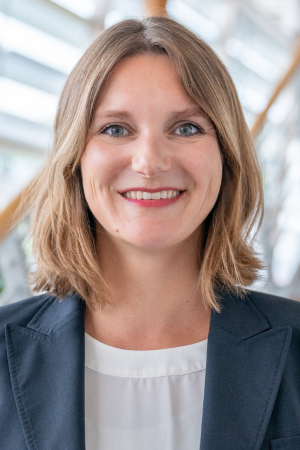
Executive Board

Governance and operational structure

The Alliance operates through a coherent governance structure designed to ensure strategic coordination, operational efficiency and inclusive decision-making.

The structure includes:

  • the Executive Board
  • three Working Groups (Mobility; Learning & Teaching; Research & Innovation)
  • the Student Council
  • the Interoperability Task Force
  • the Alliance Secretariat


Executive Board

The Executive Board is the main strategic decision-making body of the Alliance. Each partner institution appoints one senior representative with the authority to commit institutional resources and take binding decisions.

The Board meets monthly online and holds several in-person meetings each year, ensuring both continuity and agile coordination.

The Executive Board oversees the Alliance’s strategic decisions, including:

  • Approving annual priorities and work plans.
  • Endorsing key frameworks and policy instruments, such as recognition protocols, joint portfolio priorities, and micro-credential initiatives.
  • Monitoring Alliance-wide progress and resolving cross-partner issues.
  • Ensuring institutional commitment and responsible resource allocation.
  • Safeguarding the integrity of the partnership.

Decision-making follows a consensus-based approach, guaranteeing equal participation across partner institutions and preventing concentration of power. All meetings are documented through minutes and action logs, ensuring transparency, traceability and institutional memory.

Ana Tecilazić
Algebra Bernays University (Croatia)
Arnout de Leeuw
Windesheim University of Applied Sciences (Netherlands)
Bruno Van Koeckhoven
PXL University for Applied Sciences and Arts (Belgium)
Carolin Fleischmann
Rosenheim Technical University of Applied Sciences (Germany)
Diarmuid Hegarty
Griffith College (Ireland)
Jörg Franke
Technische Hochschule Nürnberg Georg Simon Ohm (Germany)
Juan Luis Vidal
Universidad Europea del Atlántico (Spain)
Ari-Pekka Kainu
Satakunta University of Applied Sciences (Finland)
Luis Tomé
Universidade Autónoma de Lisboa (Portugal)
Metin Güven
Beykent University (Turkey)
Mihaela Kardos
University of Medicine, Pharmacy, Science and Technology of Targu Mures (Romania)
Reda Mikalauskaite
SMK College of Applied Sciences (Lithuania)